Identic.ai
Identic.ai turns a product photo into a 3D model and an AR preview for furniture and interior brands. In 2025 we redesigned the product, simplified its UX and built the new front-end.
Starting point
Identic had a working AI engine and an interface that made it hard to use. The design was dated, and the UI/UX had grown one feature at a time. The client asked us to keep all the functionality and make the product simpler.
We began with an audit. We mapped every screen and flow of the existing product, counted the steps from an upload to a finished model, and collected the Identic team's requests: a better library, batch processing, a clear notice when credits run out, and support for six languages.
Reworking the logic
Before drawing new screens, we held a series of working sessions with the Identic team. We agreed on how the product should interact with its users: what they see first, what the product asks and when, and what happens after each step. We cut several steps from the main flow and moved rarely used settings out of the way.
We documented the new logic as user flows in Figma, and every screen we designed later followed them.
Exploring directions
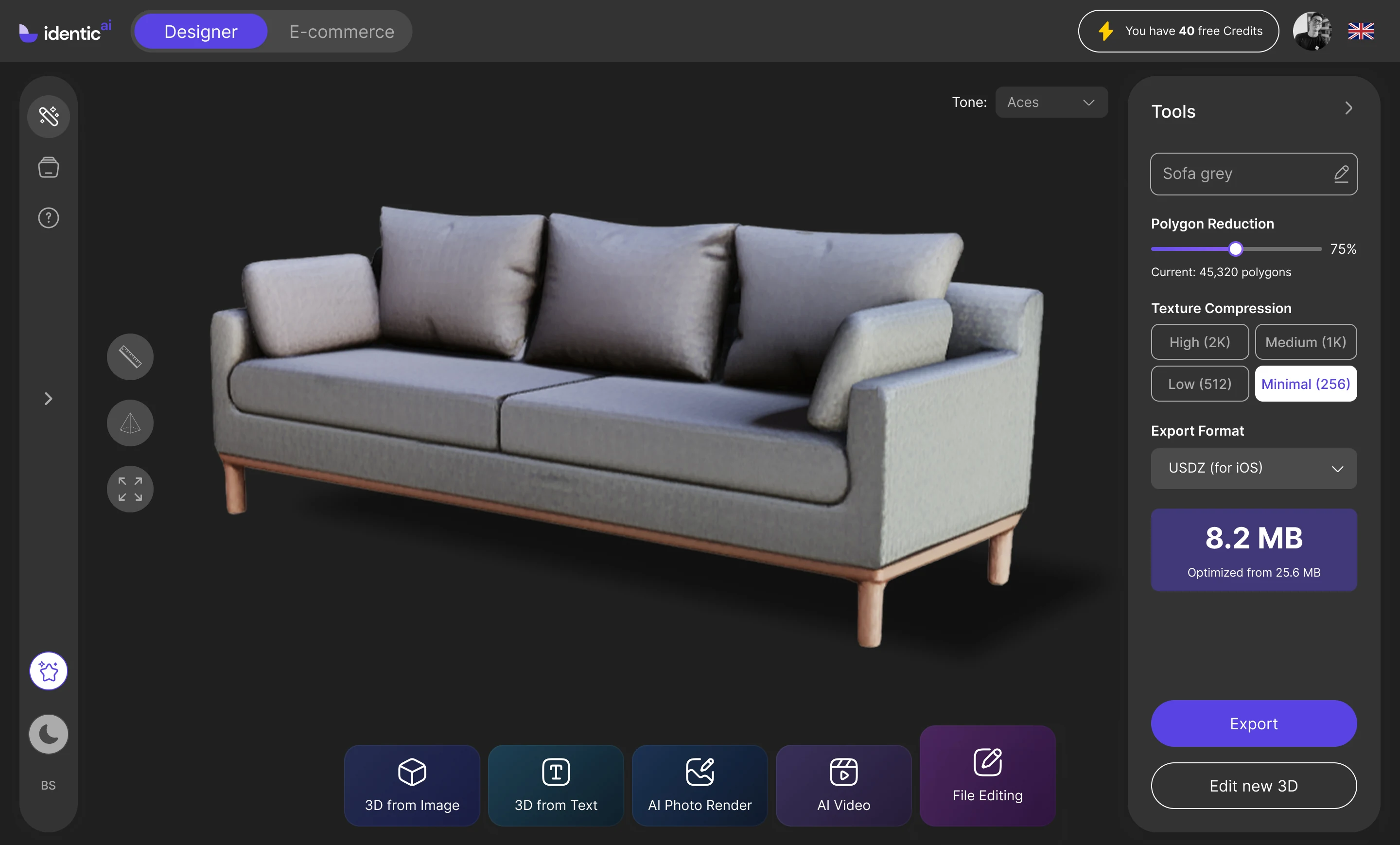
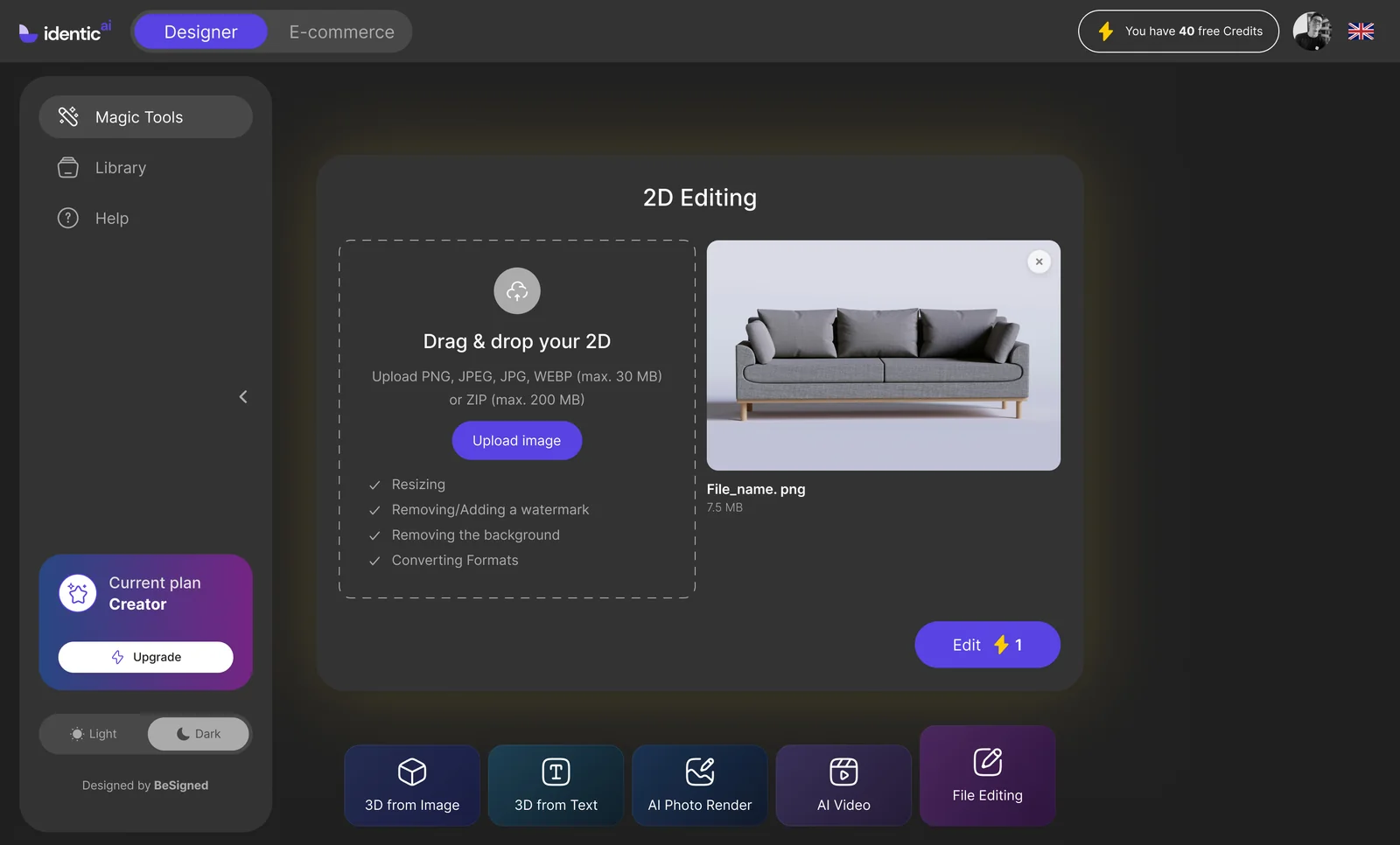
We designed three variants of the main studio screen. The client chose the one built around a large 3D viewport, with settings at the edges of the screen. From there we developed the rest of the product:
- Four tools with their own color: 3D from Image, 3D from Text, AI Photo Render and AI Video, plus File Editing
- A library with card and list views, filters, ratings and drag-and-drop ordering
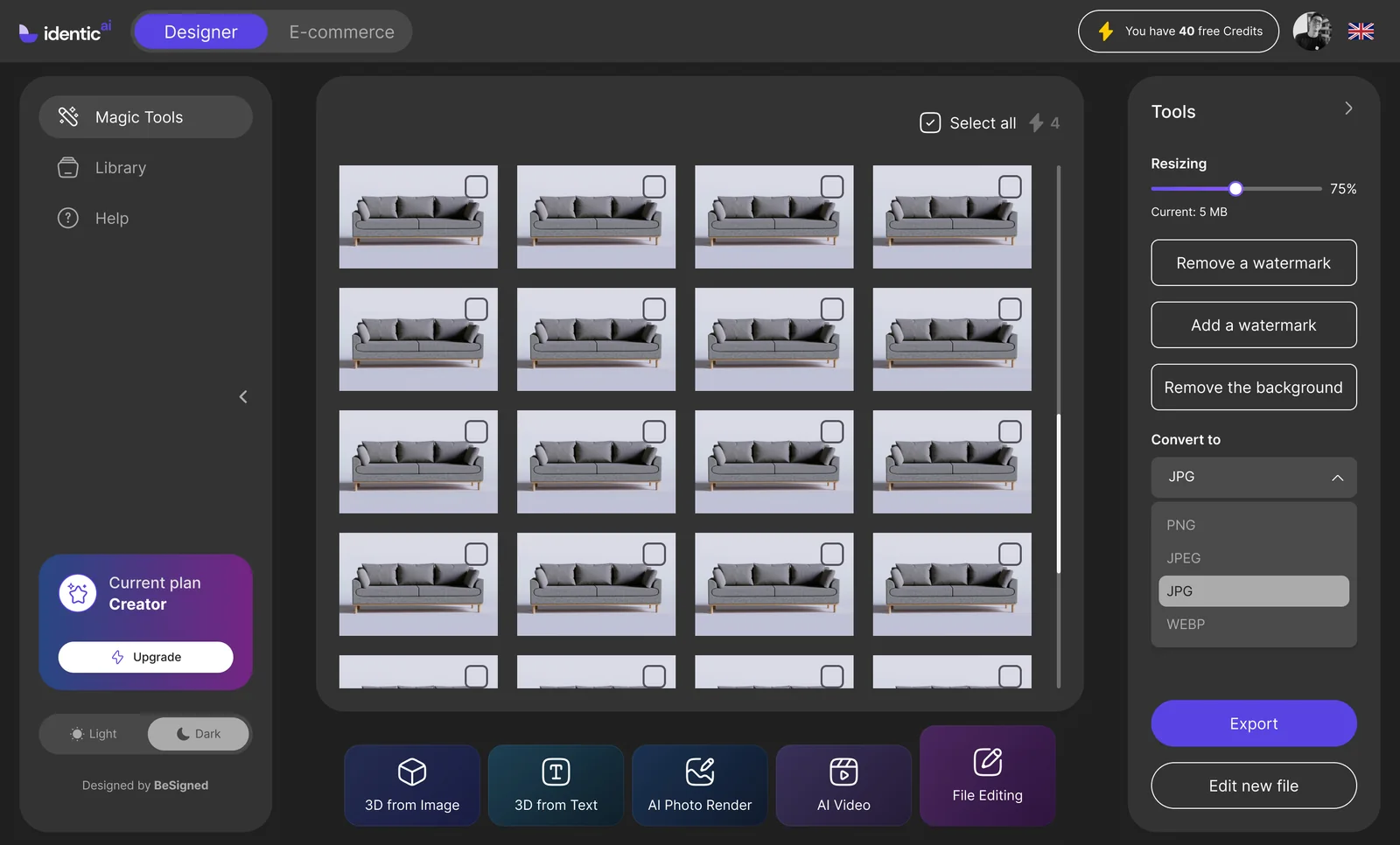
- Batch processing of up to 30 images
- An AR preview that opens on a phone through a QR code
- An e-commerce back office with products, statistics, API keys and integrations
We designed the light and dark themes in parallel, with a separate component library for each.
Refining
We reviewed the design with the client every week and adjusted it based on their feedback. The front-end engineers joined these reviews from the start, which helped us catch technical constraints early. By the end we had about 280 desktop screens, a mobile set, and error, empty and loading states for every key screen.
Development
Two front-end engineers built the new interface in React and TypeScript and connected it to Identic's existing back-end API. The component library in code mirrors the one in Figma, so designers and engineers use the same names and states. We released the new studio in stages, one tool at a time.
The team: three designers, two front-end engineers and a project manager.
Result
The new studio is live at studio.identic.ai. Users get from an upload to a finished model in fewer steps, and the Identic team can add new tools without redesigning the layout. The client continues to work with us on new features.